
The Atlas Displacement Complex
By The Migraine Doc (UCC)

The Hidden Structural Problem Behind Years of Migraine, Fatigue, and Neurological Dysfunction
There’s a condition I see in my clinic nearly every day.
It’s not something your neurologist will talk about.
It’s not something that shows up on an MRI.
And most providers don’t even know how to test for it.
But it’s often the missing link in complex migraine cases, vestibular disorders, chronic fatigue, and neurological symptoms no one can seem to explain.
It’s called the Atlas Displacement Complex (ADC).
And if it’s affecting you, it changes everything.
What Is the Atlas?
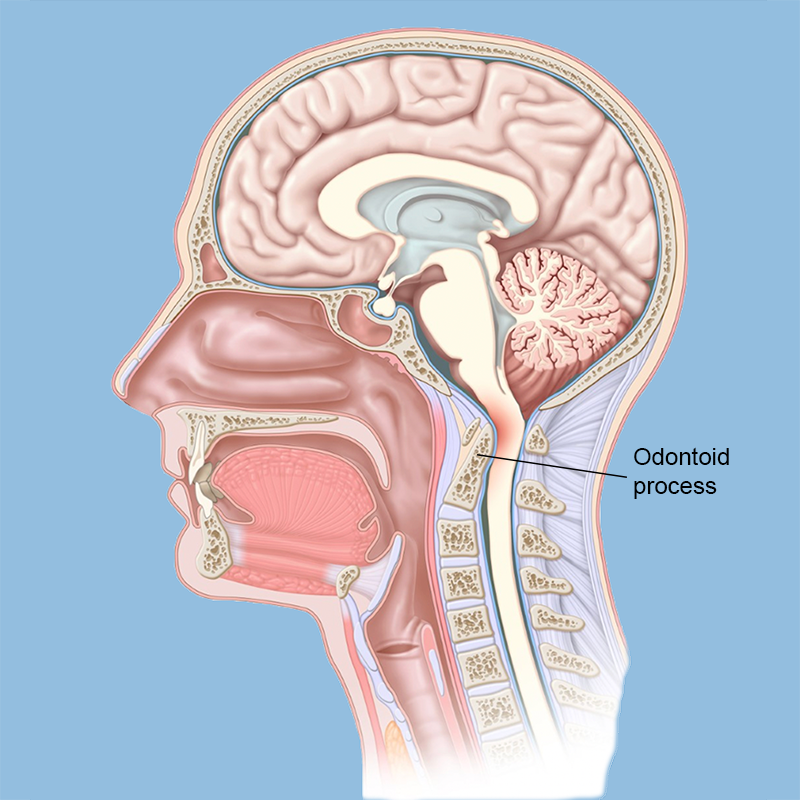
The atlas, or C1 vertebra, is the very top bone in your spine.
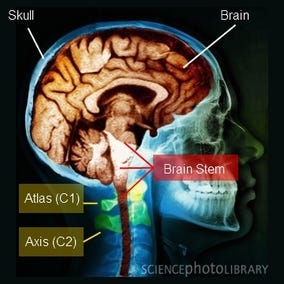
It supports the entire weight of your head, roughly 10–12 pounds, and sits just millimeters from your brainstem, spinal cord, vertebral arteries, cerebrospinal fluid (CSF) pathways, and the vagus nerve.
It’s designed for maximum mobility (so your head can turn freely)…
But that mobility comes at a cost:
There are no intervertebral discs to cushion or stabilize it
It’s held in place entirely by ligaments and soft tissue
Even a small misalignment can trigger major dysfunction
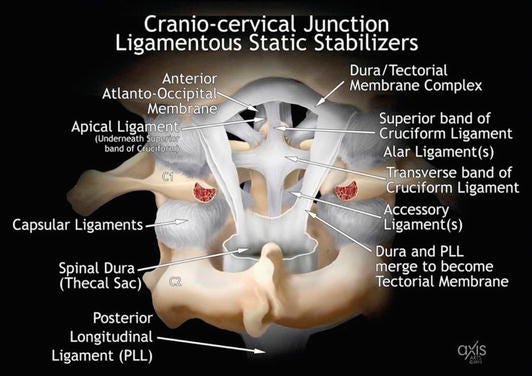
So, when the atlas shifts out of place, whether from trauma, repetitive stress, or poor posture, it can create a ripple effect throughout the entire body.
That’s what we call the Atlas Displacement Complex.
What Causes the Atlas to Misalign?
Most people don’t remember the moment it happened but the causes are usually mechanical trauma or repetitive overload on the neck.
Common causes include:
Birth trauma (C-sections, forceps, vacuum)
Falls as a toddler
Car accidents or whiplash
Sports injuries (especially contact sports)
Gymnastics, cheer, diving, or wrestling
Repetitive phone/device use with forward head posture
Even emotional trauma (which can create physical defense patterns in the body)
These events may seem “minor” at the time but once the atlas shifts, your body adapts around it.
And that’s when symptoms begin.
Why the Atlas Matters So Much
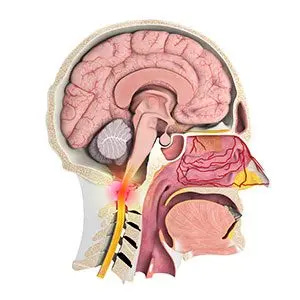
The C1 vertebra surrounds and protects the lower brainstem, specifically the medulla oblongata, which regulates:
Heart rate
Blood pressure
Respiration
Digestion
Sensory input processing
Trigeminal nerve activity (a major migraine generator)
Vestibular and balance signals
Sympathetic/parasympathetic output
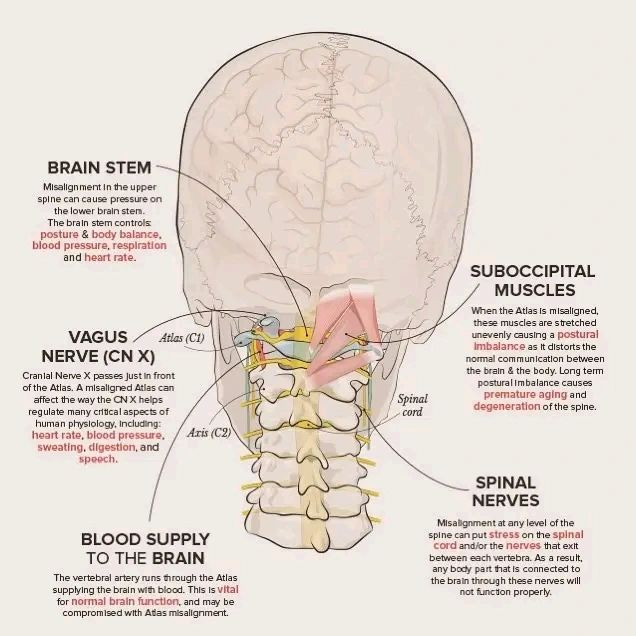
When the atlas is misaligned, it doesn’t just affect posture.
It irritates the nervous system at its highest level of control.
3 Core Features of Atlas Displacement Complex
Here’s what makes ADC so unique and so destructive when it goes undiagnosed:
1. Mechanical Brainstem Distortion
Atlas misalignment can create subtle tension, torsion, or pressure around the brainstem and upper spinal cord. This disrupts the way your nervous system interprets and filters information, leading to symptoms like:
Migraines
Visual aura
Light/sound sensitivity
Dizziness
Nausea
POTS or dysautonomia
Brain fog
Panic or emotional reactivity
Many patients are told these symptoms are “in their head,” and they are.
But not in the way people think.
They’re often in the brainstem, where the system is overloaded and under threat.
2. Disrupted Cerebrospinal Fluid (CSF) Flow
CSF is the fluid that bathes your brain and spinal cord. It helps:
Remove metabolic waste
Regulate pressure
Deliver nutrients
Absorb shock
Support immune protection
The cranio-cervical junction, where the atlas is located, is a key drainage and flow point. When this area is misaligned, it’s like putting a kink in your upper neck.
The result?
Pressure buildup in the head
Pulsatile tinnitus
Occipital or eye pain
Brain fog
Seizure-like episodes
Worsening symptoms with coughing, sneezing, or straining
CSF flow matters.
And atlas misalignment changes the dynamics of the entire system.
3. Full-Body Compensation Patterns
When your atlas shifts, your head is no longer centered over your spine.
Your body responds by adapting, often in ways that create chronic compensation and pain:
One shoulder or hip is higher than the other
Functional short leg
Mid-back or low back pain that won’t resolve
TMJ or jaw tension
Tight traps, neck, and shoulders, no matter how much you stretch or massage them
And here’s the kicker:
Nothing holds until the atlas is corrected.
Massage, acupuncture, PT, and even traditional chiropractic can help temporarily…
But if the top of the spine is off, the rest of the body is always in survival mode.
Why Is This Missed So Often?
Traditional imaging, like CT scans and MRIs, are static.
They don’t measure function. They don’t show motion. And they’re usually done lying down, where gravitational forces are removed and your postural muscles aren’t active.
Most providers have:
Never been trained to assess atlas alignment
Don’t know how to measure biomechanics
Use testing to rule out bigger underlying issues
In my clinic, we do it a little differently.
And because we have ruled out the other things based on previous testing, we can now do a deeper upper cervical assessment.
In my clinic, we use:
Biomechanical Motion X-Rays to assess head and neck positioning under real-world stress.
Functional Nervous System Testing to evaluate brainstem function and autonomic balance.
Non-twisting Upper Cervical corrections to restore proper biomechanics.
Zero-gravity post-adjustment recovery so the nervous system can integrate the change.
The Migraine Relief Blueprint to build long-term nervous system resilience
Symptoms That Often Trace Back to ADC
If you’ve been told everything looks “normal” with all of your tests, but you still experience:
Chronic migraines
Dizziness or vertigo
Visual aura
Occipital pain or pressure
Nerve pain or numbness
TMJ
Tinnitus
POTS symptoms
Fatigue or “shutdown” episodes
Panic attacks
Brain fog or memory lapses
You are not broken.
You are not a medical mystery.
You are not “out of options”.
It might be that you have an issue at the very top of your neck.
The Bottom Line
Your atlas is small, but its impact is massive.
It’s the literal gateway between your brain and body.
And when it’s off, everything downstream pays the price.
You can’t out-supplement a misalignment.
You can’t out-breathe or out-journal brainstem tension.
And you definitely can’t fix a mechanical problem with more medication.
If you’ve been living with migraines and all the frustrating symptoms that come with them, schedule a Migraine Mastermind Call with me today.
In just 30 minutes, we’ll uncover what’s been missed and build your personalized Migraine Optimization Plan.
As I always say…
Fix your neck. Fix your life.
Be blessed,
Dr. Brandon Brown
The Migraine Doc & The Specific Chiropractic Centers of Richardson Tx