
The Surprising Link Between Your Neck and Migraines: What the Science Says
#NotANeurologist

Most people and most doctors assume migraines are a brain problem.
And for a long time that made a ton sense because of what we knew about physiology and what the research at the time was showing.
But what if they’re actually a neck problem?
Not in the way you think (like needing better posture or a new pillow)...
I’m talking about a specific region of the neck that plays a massive role in regulating blood flow, nervous system function, and inflammation:
Your upper cervical spine.
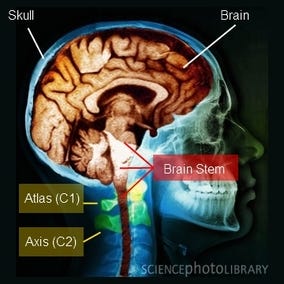
Cervicogenic Migraines: The Hidden Diagnosis
There’s a growing body of research pointing to cervicogenic migraines—headaches and migraines triggered by dysfunction in the neck.
In fact, studies have shown that irritation or misalignment of the C1 and C2 vertebrae can directly impact the trigeminocervical complex, a key hub for migraine activity in the brainstem.
This area processes sensory input from both the head and upper neck, meaning that dysfunction in one can trigger pain in the other.
In short: your neck and your head are talking to each other constantly.
When that communication goes haywire?
Cue the migraines.
The Brainstem, Vagus Nerve, and Your Neck
Here’s why this matters:
Your upper cervical spine is home to the brainstem, which controls things like:
Heart rate
Breathing
Digestion
Sensory filtering
Blood vessel dilation
Right next to it?
The vagus nerve, which is your body’s main parasympathetic nerve, passes through this area.
If the C1 or C2 vertebra shifts out of alignment (even slightly), it can:
Compress or irritate brainstem tissue
Disrupt vagus nerve signaling
Increase sympathetic “fight-or-flight” tone
Reduce cerebral blood flow
Spike inflammatory chemicals like CGRP
Which all adds up to a nervous system on edge… and a migraine waiting to happen.
What the Research Shows
A 2017 study in Headache reported that manual therapy targeting the cervical spine significantly reduced migraine frequency and intensity compared to standard care.
Other studies in The Journal of Headache and Pain and Cephalalgia have found a correlation between upper cervical misalignment and increased headache-related disability.
Imaging has shown changes in the cervical curve and joint function in migraine patients, often missed in traditional neurological evaluations.
And yet, most migraine protocols completely ignore the neck.
My Clinical Protocol: What We Do Differently
At my clinic, we use a comprehensive process to evaluate and correct this overlooked area:
✔️ Functional Nervous System Testing
We assess how your nervous system responds to stress and sensory input.
✔️ Biomechanical Motion X-Rays
These allow us to see exactly how the C1 and C2 vertebrae are moving—and whether they’re irritating nearby nerves or tissue.
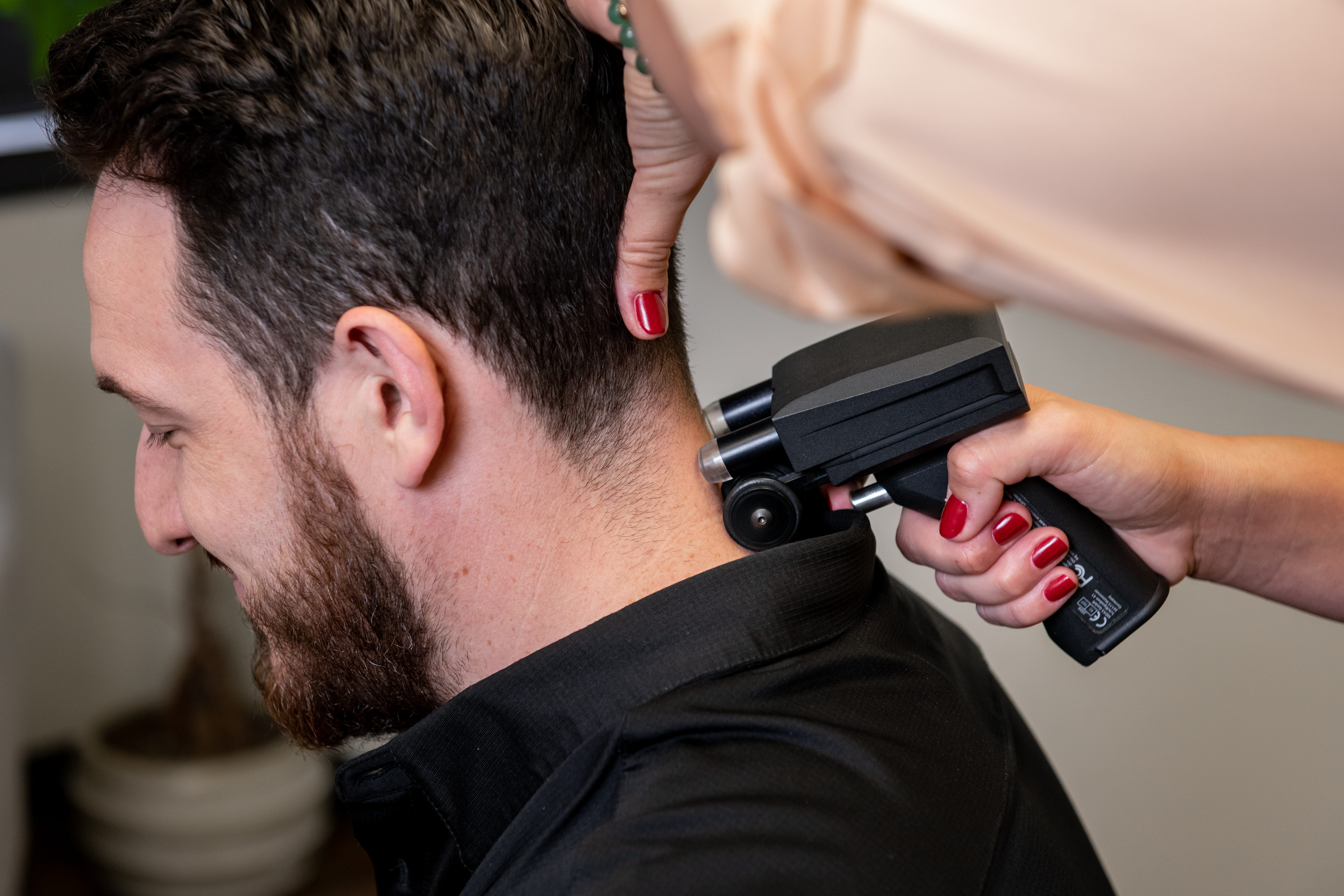
✔️ Precise Upper Cervical Adjustments
No cracking. No twisting. Just calculated corrections that restore function without force.
✔️ Post-Adjustment Recovery
We use zero gravity chairs and nervous system rest protocols to help your body stabilize and heal.
✔️ Ongoing Nervous System Optimization
This includes vagus nerve stimulation exercises, cold exposure, movement, hydration, and breathwork—based on my Migraine Relief Blueprint.
Ready to Find Out If This Is Your Missing Piece?
If you’ve tried everything—meds, Botox, labs, diets—and still feel stuck...
It’s time to go deeper.
In a Migraine Mastermind Session, we uncover what your body is really trying to tell you…
And create a custom Migraine Optimization Plan built on nervous system science.
👉 Click here to schedule your session
Or comment “Migraine” and I’ll send the link.
You don’t have to keep guessing.
Because like I always say…
Fix your neck. Fix your life.
Be blessed,
Dr. Brandon Brown
The Migraine Doc & The Specific Chiropractic Centers